

Blogs
Green Corners: How to Design a Low-Maintenance Balcony Garden for Your Kochi Apartment
Posted on Oct 26, 2026
Ask someone who has moved from a house with a yard into an apartment in Kochi what they miss most, and it's rarely the extra room. It's the curry leaf plant near the kitchen door. The smell of wet soil after the first rain. A patch of green to stand in with your morning tea. Here's the good news. A balcony can give you a surprising amount of that back, even if your calendar is packed and you've lost a plant or two before. Whether yours belongs to one of the luxury apartments in Kochi with a generous sit-out or one of the budget apartments in Kochi with a compact ledge, the same few ideas apply. Spend a Day Watching Your Balcony First Before you buy a single pot, notice what the space does on its own. How many hours of direct sun does it get? Does the monsoon rain blow in sideways? Is it breezy because you live on a higher floor?. An east-facing balcony enjoys gentle morning light, which suits herbs and flowering plants. A west-facing one bakes in the afternoon, so it needs tougher characters. Kochi's humidity works in your favour, because soil stays damp longer here than in drier cities. The flip side is that overwatering is a bigger risk than forgetting to water. Pick Plants That Forgive You Start with forgiving plants. Confidence can come later. Snake plant and ZZ plant: they shrug off missed waterings and don't mind dim corners. Aloe vera and Jade plant: they store water in their leaves, so a hectic week won't hurt them. Money plant: happy in soil or a jar of water, and fine with shade. Tulsi, Mint, Lemongrass and Curry leaf: useful in the kitchen, though curry leaf wants good sunlight. Bougainvillea and portulaca: if your balcony gets strong sun, these repay you with colour. Skip the delicate, fussy varieties until you've settled into a routine. Get the Pots, Soil and Water Right This is the unglamorous part, and it decides whether your garden survives. Go light. Fibre pots, plastic planters and grow bags are easier on your floor, and easier to move, than heavy ceramic. Drainage matters. Every pot needs holes. Empty saucers after rain, because standing water stains the floor and invites mosquitoes. Mix your soil. Garden soil, compost and coco peat together hold moisture without turning heavy. Automate a little. Self-watering planters or a small drip kit on a timer keep things alive while you travel. Mulch the top. Dried leaves or coconut husk slow evaporation and keep the soil cooler. Grow Up, Not Out Floor space is precious, so use the walls. Wall-mounted planters, a slim ladder shelf and a few hanging baskets add greenery without crowding your seating. Keep everything inside the railing line, and check your association's rules before drilling or hanging anything. A falling pot is a real hazard on a high floor. A Simple Routine for Monsoon and Summer During the monsoon, tilt pots slightly so water runs off, shift delicate plants under cover, and watch for fungus on the leaves. In summer, water early in the morning and group pots together so they shade each other. Beyond the seasons, fifteen minutes a week is enough. Push a finger into the soil and water only if it's dry an inch down. Pluck yellow leaves. Wipe off the dust. That's the whole job. Turn It Into a Place You Want to Sit A garden you never sit in is just a chore with leaves. Add a small bench or a couple of cushions, a string of warm lights, maybe a shallow bowl of water for visiting birds. Soon it becomes the spot for evening chai, and you'll look after it without being reminded. Look at the Balcony When You Choose a Home More buyers now treat the balcony as an extra room rather than an afterthought. When you tour a home, ask which way it faces, how much sun it gets, and whether there's a drain and a water point. Those small details decide how easy a garden will be. Varma Homes has apartments across Kochi, in areas such as Edappally, Kaloor, Tripunithura, Palarivattom and Kadavanthra. Whether you're comparing luxury apartments in Kochi or searching for budget apartments in Kochi, walk the balcony before you decide. FAQs What are the easiest plants to grow on a balcony in Kochi? Snake plant, ZZ plant, money plant, aloe vera and Tulsi are among the easiest. They put up with irregular watering and cope well with Kochi's humid weather. How often should I water balcony plants? Most low-maintenance plants need water two or three times a week. Check the soil first. If the top inch is dry, water. If it's still damp, wait. Can I have a balcony garden in budget apartments in Kochi? Yes. A few lightweight pots, a hanging planter and compact herbs work well even in the smaller balconies of budget apartments in Kochi. How do I protect balcony plants during the Kochi monsoon? Make sure every pot drains well, move delicate plants under cover, and empty the saucers so water never collects. Is a balcony garden safe for an apartment floor? Yes, if you use lightweight pots with saucers and keep drainage in check. Avoid very heavy planters, and wipe up spills quickly. Ready for a Home With Room to Grow? Your green corner is waiting. Explore luxury apartments in Kochi and more with Varma Homes, visit a project, and see the balcony for yourself. Call +91 9645 88 33 33 or visit www.varmahomes.com to book a consultation.
Read MoreKitchen Makeover Ideas in Thrissur: Transform Your Cooking Space
Posted on Sep 30, 2026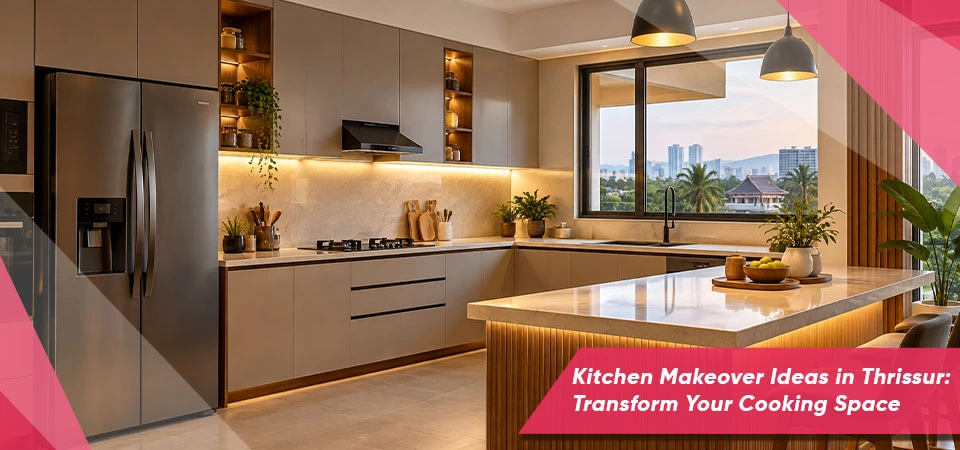
The kitchen is the first room buyers notice and the one your family uses the most. Kitchen makeover ideas that focus on layout, lighting, and easy-to-clean surfaces can transform a tired cooking space without major structural work. For owners of Apartments in Thrissur, where floor plans are compact and well defined, small changes deliver the biggest daily returns. Quick Diagnosis The blog is aimed at making changes to an apartment kitchen in Thrissur with respect to layout, storage, lighting, ventilation, materials used, and healthy kitchen designing. Apart from this, the blog makes a connection between the mentioned improvement and the trends of the real estate market in Thrissur along with the demands of modern buyers of houses. Why the Kitchen Decides How a Home FeelsKitchen Makeover Ideas That Fit a Thrissur ApartmentLight the Work Surface, Then the RoomDesigning for a Healthier KitchenWhat New Thrissur Projects DeliverConclusionFrequently Asked Questions Why the Kitchen Decides How a Home Feels Buyers in Thrissur increasingly judge a home by its kitchen before anything else. Real Estate Market Trends in Thrissur show that finished, functional kitchens are now an expectation rather than a bonus, with modular storage and open layouts at the top of every checklist. A modest, well-executed upgrade does more for a property's appeal than an expensive renovation in a rarely used room, because the kitchen signals how well the whole home has been maintained. The same thinking applies across the state , see our kitchen design guide for Kochi apartments for how the pattern plays out there. For investors, a kitchen that photographs well also shortens the time a listing spends on the market, a quiet advantage in any season. Kitchen Makeover Ideas That Fit a Thrissur Apartment Start with the working triangle: keep the hob, sink, and refrigerator close together to cut wasted movement. Vertical storage, pull-out cabinets, and a corner carousel free up counter space without knocking down a single wall, which matters in a Thrissur flat where every inch is measured. Choose humidity-resistant backsplashes and finishes that wipe clean, because the region's rains and heat punish surfaces that trap moisture. Even two or three of these changes , a new countertop, soft-close drawers, better handles , make the room feel rebuilt. Light the Work Surface, Then the Room Lighting Ideas change how a kitchen feels more than any other single upgrade. Under-cabinet task lights brighten the work surface, while a warm pendant over the sink or breakfast counter sets the mood in the evening. Layer a bright ceiling light for prep work with warmer accents for dining, and pick LED strips that stay cool through Kerala's summer heat. Good light also makes a compact kitchen look larger, which is why it pays for itself before you spend anything on paint. Where a kitchen faces north or east, morning light lands on the countertop for free; where it does not, a daylight-toned LED strip under the cabinets closes the gap. Designing for a Healthier Kitchen Healthy Living starts with materials and air. Marine-grade ply and melamine-faced boards resist the humidity that swells untreated wood, while quartz and granite tops handle hot pans without staining. A powerful chimney and a well-placed exhaust keep grease and moisture off cabinets, and natural light with cross-ventilation keeps the room fresh through the monsoon. These choices protect the family and the kitchen itself, and they cost no more than materials that fail in a few years. During the monsoon, when windows stay shut for days, the chimney and exhaust matter even more, because trapped steam is what makes cabinet edges swell. What New Thrissur Projects Deliver Builders in Thrissur now ship homes with kitchens designed around these principles, so a makeover is often an upgrade rather than a rebuild. Varma Haven at Chelakottukara (K-RERA/PRJ/TSR/064/2026) offers 2 and 3 BHK apartments of 1172–1637 sq ft across 72 units, and Downtown by Varma near Swaraj Round (K-RERA/PRJ/TSR/110/2024) adds 2/3 BHK options from 1140 to 1747 sq ft. Before you renovate or buy, know your rights and duties under the Kerala RERA, and plan the budget with our home loan EMI calculator to see what a makeover costs per month. Conclusion Whatever the size of your kitchen, the goal is the same: a space that works hard every day and still feels welcoming. Start with lighting, storage, and surfaces, plan the budget first, and the room will reward you at every meal. Small, well-chosen upgrades compound over time , brighter task light, drawers that close softly, counters that wipe clean. Done in the right order, the kitchen becomes the room your family gathers in and the one buyers remember, and that is a return that lasts well beyond resale. Frequently Asked Questions How much does a kitchen makeover cost? Costs vary widely with materials and scope, so the honest answer is that a refresh can be as modest or as extensive as the budget allows. The highest-impact spending order is paint and hardware first, then lighting, then the countertop and cabinets. What is the fastest way to refresh a kitchen? A fresh coat of paint, new handles, and brighter task lighting change the room in a weekend. These are the cheapest fixes and the ones guests and buyers notice first. Do kitchen upgrades increase an apartment's resale value? Yes , the kitchen is the first room most buyers inspect, so a well-maintained kitchen lifts both the asking price and the speed of the sale. Buyers treat it as proof of how the whole home has been cared for.
Read MoreRevamp Your Kitchen in Kochi: Ideas to Transform Your Space
Posted on Sep 29, 2026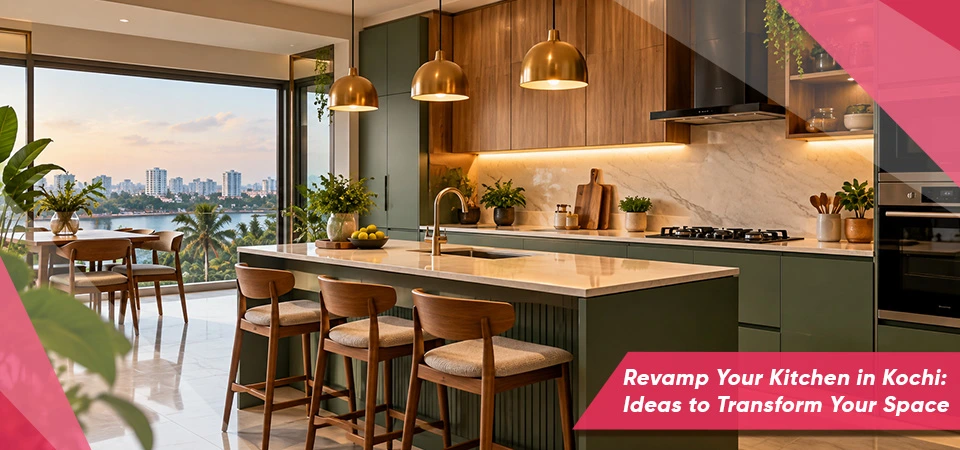
A kitchen is more than a place to cook, it is the room that makes a flat feel like home. That is why the reward owners who upgrade the space buyers notice first. Whether you have just moved into a new apartment or a 3 bhk flats in Kochi or are preparing to sell, a well-planned kitchen refresh adds everyday comfort today and resale value tomorrow. It is also one of the more affordable upgrades, since most of the change comes from layout, surfaces, and storage rather than structural work. What the Real Estate Market Trends in Kochi Mean for Your Kitchen Buyers in Kochi increasingly expect finished, functional kitchens rather than empty shells. Open layouts, modular storage, and easy-to-clean surfaces are no longer extras; they are what people look for when they compare Flats in Kochi. A modest, well-executed upgrade can therefore do more for your property than an expensive renovation in a rarely used room. Today's buyers treat the kitchen as a sign of how well the whole home has been maintained, so it deserves a share of any renovation budget. Browse the current apartments in Kochi to see how new homes are being designed today. Kitchen Design Ideas That Work in Kochi Apartments Start with the working triangle: keeping the hob, sink, and refrigerator close together cuts wasted movement and makes cooking feel effortless. In a Kochi apartment, where space is precious, vertical storage and pull-out cabinets free up counter space without structural changes are key real estate market trends in Kochi. Under-cabinet lighting brightens the work surface, while a humidity-resistant backsplash and good ventilation suit the city's coastal climate. Choose finishes that are easy to wipe down, because Kochi's humidity and salt air punish surfaces that trap moisture. Set aside part of the budget for lighting, because a bright worktop makes even a compact kitchen feel larger and more welcoming. Premium Vs Ultra Premium: Choosing Your Finish Level The two tiers differ mainly in materials and hardware. A premium kitchen uses durable laminates, quartz or granite countertops, and branded fittings built to last. An ultra premium kitchen adds soft-close systems, engineered stone, and fully custom cabinetry that is made to measure. Start with a budget, then upgrade the things you touch every day taps, handles, and the countertop before spending on decorative extras. This keeps the renovation practical without drifting into overspending when it comes to Premium vs Ultra Premium. Materials That Survive Kochi's Climate Kochi's heat, humidity, and coastal air are hard on kitchen surfaces, so material choice matters as much as layout. Melamine-faced boards and marine-grade ply resist swelling better than untreated wood, while quartz and granite tops handle spills and hot pans without staining. For hardware, choose stainless steel or coated brass that will not corrode near the coast. A powerful chimney and a well-placed exhaust keep grease and moisture from settling on cabinets, which extends the life of the entire kitchen. Layout Ideas for Larger Apartments If you own a flat in Kochi, you have room for an island or a breakfast counter that doubles as a workspace in kitchen design. An L-shaped or parallel layout keeps the cooking zone contained while leaving the rest of the room open for family life. Use the extra width for a tall pantry unit, and place the dining area close to natural light. Even small changes, such as moving the microwave off the counter, adding a corner carousel, or grouping appliances into one tall unit, make a large kitchen feel organised rather than sprawling. Plan the island with power points for mixers and chargers, so the surface stays useful all day. Know Your Duties Before You Buy or Renovate Whether you are buying a new flat to renovate or upgrading the one you already own, it helps to know your legal footing. The Kerala Real Estate Regulatory Authority publishes the official Rights and Duties of Allottees. Reading them before you sign protects you in any deal with Builders in Kochi and keeps your renovation budget safe from surprises. When you understand the paperwork, you can focus your money on the kitchen itself. Conclusion A kitchen revamp need not be expensive to be effective. Focus on layout, storage, and surfaces that suit Kochi's climate, and spend your money on the fittings you use every day. Whether you renovate for yourself or for a future sale, the result should be a room that works hard and feels welcoming. For help planning your budget, try our home loan EMI calculator or explore more homes across Kochi. FAQs What are the best ways to revamp a kitchen in a Kochi apartment?Focus on improving storage, lighting, countertops, cabinetry, and ventilation. Space-saving solutions such as pull-out cabinets, tall storage units, and modular designs work especially well in Kochi apartments. Which kitchen materials are suitable for Kochi’s climate?Marine-grade plywood, quartz, granite, stainless steel, and moisture-resistant laminates are good choices. These materials can better withstand Kochi’s humidity, heat, and coastal air. Does renovating a kitchen increase the value of a flat in Kochi?A well-planned kitchen upgrade can improve everyday functionality and make a property more appealing to potential buyers. Modern storage, durable materials, good lighting, and efficient layouts can contribute to the property's overall appeal and resale potential.
Read MoreTrident: A New Benchmark for Premium Living in Trivandrum
Posted on Sep 28, 2026
Trident is Varma Homes' newest statement in the capital city , a 2/3 BHK luxury apartment project at Jagathy, Thiruvananthapuram, built with red-brick construction and registered with K-RERA under K-RERA/PRJ/TVM/001/2025. With a super built-up area from 1,162 to 2,424 sq ft, it offers the space and finish that families in the city have been waiting for, from a builder whose 16+ completed projects speak of on-time delivery and dependable after-sales service for Luxury flats in Trivandrum. Table of Contents Why Trident Sets a New Benchmark A Prime Address in Jagathy Living Spaces Built Around Light Trivandrum's Evolving Market Frequently Asked Questions Why Trident Sets a New Benchmark A benchmark is the standard others are measured against, and Trident earns that role in three ways. First, the sizes: homes from 1,162 to 2,424 sq ft give families room to grow without leaving the city. Second, the build: red-brick construction, the material Kerala homebuyers have trusted for generations. Third, the assurance: a full K-RERA registration that protects your investment from day one. Few builders in Trivandrum offer this combination of prime location, construction transparency and a track record that spans 16+ projects and memberships in CREDAI, BAI and IGBC. When you buy here, you are not just buying an apartment , you are buying the confidence that comes from a developer who has handed over homes on time across Kochi, Thrissur and the capital. A Prime Address in Jagathy Jagathy is one of Thiruvananthapuram's most established residential localities, sitting close to the city's core where schools, offices and hospitals are part of everyday life. For working families, that centrality keeps the school run, the office commute and weekend errands short and familiar. Varma chose Jagathy deliberately: a neighbourhood that is already settled, with the conveniences of a capital city around it, rather than a plot waiting on future development. Trident brings luxury flats in Trivandrum to a location where the essentials of city life are already in place. The project page lists Trident as Work in Progress, which means today's buyers enter at the pricing stage that rewards early decision-makers. Browse the full flats and apartments in Trivandrum lineup to see how Trident sits alongside Varma Niyati, Sreekaryam and Suburban in the same city. Living Spaces Built Around Light Good apartment design starts with light, and the layouts at Trident are planned around how a family actually lives: bright living areas that hold the evening together, bedrooms that stay calm, and kitchens where morning light changes the feel of the day. Practical lighting ideas , layered natural light, warm accent fixtures and bright work zones , make every square foot feel larger, and they are the details that separate a well-made home from a merely built one. This is what a luxury lifestyle looks like at Trident: not clutter or excess, but space that works, light that flatters and materials that age well. Red-brick construction keeps interiors cooler and quieter, a quiet advantage that shows up in the comfort of everyday living rather than in a brochure. Trivandrum's Evolving Market Real estate market trends in Trivandrum point one way: buyers want more space, better construction and greater transparency, and they want it in established locations. Trident answers all three. Demand for flats in Trivandrum continues to grow as the capital's economy expands, and projects with K-RERA registration and red-brick construction hold their value best in that environment. For investors, a Work-in-Progress project from a proven builder is one of the more balanced positions in the market. The registered status matters too , K-RERA's own guidelines on the duties of allottees make the payment-and-delivery obligations clear for both sides. Use the home loan EMI calculator to model your monthly outgo, and compare Trident with Varma's other residential projects in Kerala before you decide. More context on the city's market sits on the Varma blog. Conclusion This article walked through the essentials of Trident: a settled Jagathy address, 2 and 3 BHK layouts from 1,162 to 2,424 sq ft, red-brick construction and a K-RERA registration (K-RERA/PRJ/TVM/001/2025) that stays publicly verifiable while the project is Work in Progress. For buyers comparing options in the capital, those are the points worth checking in person and Varma Homes, with completed projects across Kerala, is a builder worth including in that comparison. Trident, in short, is a reasonable place to start that comparison and for buyers who want a home that holds both its comfort and its value, it deserves a closer look. Frequently Asked Questions What are the flat configurations at Trident? Trident offers 2 and 3 BHK luxury apartments with a super built-up area ranging from 1,162 to 2,424 sq ft. What construction method does Trident use? The project is built with red-brick construction, the highlight Varma lists on the official project page. When can buyers expect to move in? The project is listed as Work in Progress, so timelines depend on construction progress , contact the Varma team for the current schedule and availability.
Read MoreVarma Haven: The New Standard of Premium Living in Thrissur
Posted on Sep 27, 2026
Varma Haven is Varma Homes' newest launch in Thrissur, and it arrives with a clear promise: premium living without compromise. The single tower at Chelakottukara spans a 72.5-cent plot with ground plus 14 floors, holding 72 units of thoughtfully planned 2 and 3 BHK apartments from 1172 to 1637 sq. ft. Its K-RERA registration meeting real estate market trends in Thrissur, K-RERA/PRJ/TSR/064/2026, puts every commitment on the public record before you pay a rupee. Built to a Higher Standard What sets this project apart is how the building is put together by builders in Thrissur. The reinforced cement concrete structure is earthquake-resistant for Zone 3, with solid-block walls, vitrified tile flooring, UPVC sliding windows, and concealed plumbing and wiring throughout. Every flat has provision for air conditioning in all bedrooms, modular switches, an independent KSEB meter, and telephone and TV points in the living room. These are details buyers usually pay extra for after booking. At this project, they are part of the standard specification Living at Varma Haven The amenity list reads like a resort brochure, and this time the brochure is accurate. Residents get a swimming pool with a kids' pool, an AC health club, a yoga space, a library, indoor games, an open gym, a children's play area and an elders' corner. Outside, a landscaped terrace party area and ample green space sit alongside practical additions: rainwater harvesting, a common-area solar system, a water treatment plant, EV charging provision, and 24-hour power and water with two lifts on generator backup. Security runs to round-the-clock surveillance, biometric and digital door locks, and firefighting facilities. For buyers comparing luxury flats in Thrissur, that mix of recreation and security is what separates a home from a house. Why Thrissur Keeps Growing Thrissur is the cultural capital of Kerala, but its property market is driven by something steadier than festivals. The city anchors strong banking and bullion businesses, hosts the InfoPark, and draws families with its schools, hospitals and jewellery manufacturing. That foundation keeps real estate market trends in Thrissur pointed in one direction: demand for well-located, well-built homes. Varma Haven sits at Chelakottukara with access to the city's main corridors, close to the institutions and hospitals working families actually use. A Registered New Launch Worth Your Attention This is also where Varma Haven earns its place as a good investment option. New launches price apartments before the project completes, which is exactly when the value gap is widest. The K-RERA registration K-RERA/PRJ/TSR/064/2026 means the promoter's obligations are filed with the Kerala Real Estate Regulatory Authority, and the authority publishes the duties of allottees so you know what is required on your side before you sign. Varma Homes has built its name on on-time delivery and after-sales service, with 16+ projects completed and memberships in CREDAI, BAI and IGBC. For serious builders, RERA registration is the minimum. For buyers, it is the difference between a promise and a contract. Run the numbers with the EMI calculator before you visit the site knowing your monthly outgo at different rates makes the negotiation easier. Flats in Thrissur are not hard to find. What has been hard to find is a new launch that combines resort-grade amenities, verified documentation and a builder with a delivery record. Varma Haven is that combination. See the project page for floor plans and specifications, compare it with other residential projects in Kerala, and browse apartments in Thrissur to see how it fits the market. The Bottom Line Thrissur's buyers have waited for a New Launch that combines resort-grade amenities, verified documentation and a builder with a proven delivery record. This project delivers exactly that: 72 units of 2 and 3 BHK apartments from 1172 to 1637 sq. ft., a full amenity stack, and K-RERA registration on file. Start here to review the floor plans, read about the company's track record, and book a consultation to walk through the options while the launch phase lasts. More guidance for first-time buyers lives on the Varma Homes blog. Frequently Asked Questions What is Varma Haven? Varma Haven is a New Launch by Varma Homes at Chelakottukara, Thrissur a single tower of 72 units in 2 and 3 BHK configurations, sized from 1172 to 1637 sq. ft. It is registered with the Kerala Real Estate Regulatory Authority under K-RERA/PRJ/TSR/064/2026. Where is Varma Haven located? The project sits at Chelakottukara, Thrissur, with direct access to the city's main corridors and close to the schools, hospitals and institutions working families use daily. Chelakottukara is one of Thrissur's well-connected residential pockets, which keeps the location convenient for commuting and everyday needs. What configurations and sizes are available? Varma Haven offers 2 and 3 BHK apartments from 1172 to 1637 sq. ft. Each flat comes with AC provision in all bedrooms, modular switches, an independent KSEB meter, and telephone and TV points as standard.
Read MoreBipartisan Housing-Affordability Policies in Kochi’s Real Estate Market
Posted on Sep 26, 2026
Bipartisan Housing-Affordability policy is what happens when rival political camps agree on one thing: housing has become too expensive. In the United States, both major parties now back supply-side answers: more land, faster approvals and tax relief for first homes. India has no such party-line debate, yet the same forces are reshaping the real estate market and Real Estate Market Trends in Kochi. Buyers who understand them make calmer, better-timed decisions. Table of Contents What Does Housing Affordability Mean? Why Kochi Should Watch This Conversation The K-RERA Transparency Layer Rates, Supply and Buyer Sentiment What Bipartisan Housing-Affordability Means for Buyers Renovation Ideas and Long-Term Value The Bottom Line for Kochi FAQ What Does Housing Affordability Mean? The phrase has a simple core. Housing is affordable when a typical household can buy or rent without strain. Researchers measure it with the median house-price-to-income ratio, and with the rule that housing should cost no more than about 30% of income; the definition in the Wikipedia article on affordable housing explains in detail. Bipartisan support grows when both parties face the same voter anger. That is why US lawmakers on both sides now push zoning reform, cheaper building finance and tax credits for entry-level homes. None of those tools transfers to Kerala directly. The principle does: affordability improves when supply grows, costs fall and rules become predictable. Why Kochi Should Watch This Conversation Kerala does not run on party-line housing bills. It runs on a cross-party consensus that real estate needed a referee. That consensus produced the Real Estate (Regulation and Development) Act, 2016, and Kerala's own K-RERA has enforced it since 2018. Today, every apartment in Kochi project you see advertised carries that discipline: its RERA number, its escrow account, its promised timeline. That matters more than it looks. When both sides of politics agree on transparency, the protection does not vanish when governments change. Policy continuity is itself a quiet form of affordability: it keeps risk out of the price you pay. The K-RERA Transparency Layer Transparency lowers cost without lowering price. A promoter must keep project funds in escrow, file progress reports and honour the duties of allottees that K-RERA defines. The chance of a stalled project falls sharply when these rules are enforced. A buyer who receives a home on time has paid less, in real terms, than a buyer who waits years for a refund. That is the affordability nobody prints on a brochure. Kerala's record on completed projects, from Urban Heights at Kadavanthra to the newest launches in Thrissur, rests on this framework. Rates, Supply and Buyer Sentiment The second lever is money. India's Reserve Bank kept money-market call rates in the 4.60–5.30% band as of 23 September 2026, and home-loan rates follow the same cycle. When borrowing costs ease, EMI math improves and more households qualify for a first home. Market Trends in Kochi today show demand tracking the rate cycle, while supply tracks trust in delivery for Living in Luxury Apartments. Projects that launch with clear registration, like the residential projects across Kerala, sell on the strength of that trust. What Bipartisan Housing-Affordability Means for Buyers A lower rate cycle widens the buying window. More families can step up from two bedrooms to 3 bhk flats in Kochi, and more young buyers can enter the market at all. The practical test is simple: check the EMI before you check the carpet area. Use the home loan EMI calculator to test what a project actually costs across tenures. Add registration, stamp duty and interior work to the number. Affordability is not the sticker price; it is the monthly outflow you can carry without stress. Renovation Ideas and Long-Term Value Smart Renovation Ideas protect the value of what you buy. A well-planned kitchen, good storage and sensible lighting cost far less than a fresh purchase later. And the real payoff of Living in Luxury Apartments is not marble, it is location, build quality and a builder who stays reachable after handover. That is why Varma Homes documents its journey and standards openly, and why its completed work speaks louder than any launch promise. The Bottom Line for Kochi The phrase is a foreign one with a local lesson: housing gets fairer when rules are enforced, money is cheap and supply is honest. In Kochi, that combination is already visible. Serious Builders in Kochi publish their RERA numbers on the brochure, escrow the money and hand over on time. If you are ready to compare options, the Kochi and Trivandrum project pages are a good place to start. Talk to us when you want a straight answer on pricing, timelines or financing. FAQ What does housing affordability actually mean? Housing is affordable when a typical household can buy or rent without strain roughly 30% of income or less. Researchers measure it the same way, using the median house-price-to-income ratio. Do bipartisan housing-affordability policies apply in India? No. The phrase describes a US legislative debate, and none of those bills has jurisdiction in Kerala. The local equivalent is the cross-party consensus behind RERA: enforced escrow, timelines and allottee protections that outlast any government. How do interest rates shape the buying decision? Home-loan rates follow the RBI rate cycle. When borrowing costs ease, EMI math improves and more households qualify for a first home which is why demand in Kochi tracks the rate cycle so closely.
Read MoreNiyati: A Premium Residential Project in Trivandrum
Posted on Sep 25, 2026
Niyati is Varma Homes' newest premium residential project in Trivandrum, and it arrives at the right moment for the city's most promising corridor. If you have been comparing flats, this new launch deserves a closer look. It brings 2/3 BHK homes to Kazhakkoottam, minutes from Technopark affordable luxury, registered with K-RERA before construction began and follows the real estate market trends in Trivandrum. Niyati: A New Launch Worth Your Attention Niyati sits in Kazhakkoottam, the suburb that has quietly become Trivandrum's growth engine. The project offers 2 and 3 BHK luxury apartments with super built-up areas from 1,136 to 1,661 square feet. Varma Homes markets it as "an affordable luxury residential address." The positioning fits the location high-value living without the premium you might expect closer to the city core. The project is a new launch, which means early buyers choose their floor and facing before the community fills up. Varma's own listing describes it as a home with everlasting value, built for comfort and superior finish, and the launch comes with special offers for those who book early and looking for the best flats in Trivandrum. Why Trivandrum's Real Estate Is Rising The clearest real estate market trends in Trivandrum point one way: demand has moved toward the Kazhakkoottam–Kulathoor belt, where the jobs are. Technopark is India's first IT park, its largest green technology park, and a 768-acre campus hosting multinational companies and thousands of professionals. That employment base creates steady rental and resale demand around it, which is why new residential projects keep arriving in this corridor. There is also the quality-of-life argument. The benefits of living close to where you work show up daily shorter commutes, more family time, and easy access to the schools, hospitals and green spaces that line this stretch of the city. Inside Niyati: Homes Designed for Comfort Luxury flats in Trivandrum often compromise on space to hit a price point. Niyati does the opposite. The 2 BHK homes start at 1,136 square feet and the 3 BHK units stretch to 1,661, giving families room to grow without leaving the budget behind. Varma Homes builds with red bricks and proven construction practices across its Kerala projects. The project follows the same standard, with amenities designed for everyday living rather than show. For buyers weighing where to park capital, a K-RERA-registered apartment in a growth corridor is one of the more disciplined real estate investment decisions available today. Rental demand near Technopark is strong. The "affordable luxury" bracket keeps it accessible to working professionals and young families alike. RERA-Registered: The Varma Homes Advantage Varma Homes is counted among the trusted builders in Trivandrum, and the trust is earned rather than claimed. The company has completed 16+ projects across Kerala and holds memberships in CREDAI, BAI and IGBC. It also has a record of delivering early both Dr. Pai's projects at Poojappura were completed ahead of schedule. Niyati carries registration number K-RERA/PRJ/TVM/106/2026 with the Kerala Real Estate Regulatory Authority. That registration locks in the project's timelines, escrow protection for your money, and the duties the promoter owes you. Read the official K-RERA page on the duties of allottees before you book. Your Next Step This new launch comes with special launch offers, and Varma Homes invites you to view the site and compare the layouts. Start with the full list of apartments in Trivandrum, or see how the project fits into Varma's residential projects across Kerala. If numbers matter, the home loan EMI calculator helps you work out a monthly plan before you visit. Talk to the team through the contact page and book a site visit at your convenience. FAQ: Niyati in Trivandrum Is Kazhakkoottam a good location for a family home? Yes. The corridor combines Technopark employment, established schools and hospitals, and a growing community of similar premium projects. How does RERA registration protect me? K-RERA registration means the project's timelines, plans and finances are disclosed and monitored. Your payments are protected by escrow, and the promoter must meet the duties laid out under the Act. Is a Niyati apartment worth investing in? Yes, for a simple reason: rental demand near Technopark stays strong. A K-RERA-registered home in a growth corridor combines that demand with regulated delivery timelines.
Read MoreHow New Housing-Affordability Policies Could Influence Thrissur's Property Market
Posted on Sep 24, 2026
New Housing-Affordability policies are quietly changing how families in Thrissur buy their first home. From the subsidy pipeline of the Pradhan Mantri Awas Yojana (Urban) to a calmer interest-rate cycle, the real cost of owning an apartment is shifting in ways that reward buyers who plan ahead. This guide looks at what the policy push actually changes, where the savings come from, and what to verify before you commit to Real Estate Market Trends in Thrissur. Table of contents How New Housing-Affordability Policies Reach Thrissur Buyers How the Credit-Linked Subsidy Lowers Your EMI Interest Rates, Home Loans and Buying Power The RERA Factor: Documentation That Protects Buyers What This Means for Thrissur's Market Questions Buyers Ask Us The Bottom Line How New Housing-Affordability Policies Reach Thrissur Buyers India's housing policy has spent the last decade pushing affordability through the Pradhan Mantri Awas Yojana (Urban). The official PMAY portal shows the scale: 127.68 lakh houses sanctioned, 121.03 lakh grounded and 99.07 lakh completed, with ₹2.12 lakh crore of central assistance committed. The component that touches home buyers directly is the Credit Linked Subsidy Scheme (CLSS), which reduces the interest a family pays on an eligible home loan. The subsidy is processed through the bank or housing finance company at disbursal, so the benefit lands inside the EMI itself rather than as a form to file later. For a city like Thrissur, where the mid-segment 2 and 3 BHK band carries most of the demand, that matters. How the Credit-Linked Subsidy Lowers Your EMI CLSS works by lowering the effective rate on a loan, which is why the monthly outgo drops even though the sticker price does not. A subsidy of a few percentage points on a twenty-year loan can cut thousands of rupees off the EMI, and that saving is what moves a family from renting to owning. For Apartments in Thrissur priced within the scheme's eligible limits, the calculation is straightforward: lower effective rate, lower EMI, and a shorter practical payback. Buyers should ask their lender whether their project and income band qualify before they sign, because the benefit is claimed through the lending institution, not the builder. Interest Rates, Home Loans and Buying Power Interest is the largest single cost in any home purchase, which is why the direction of rates dominates Real Estate Market Trends. The benchmark for every home loan in India is the RBI's policy stance, and the government securities market shows where borrowing costs are heading. The latest yields published on the RBI homepage put the 6.20% GS 2029 at about 6.57% and the longer 6.94% GS 2036 at roughly 7.06%, a band that points to a calmer cost of funds than earlier cycles. When long-term yields ease, home loan rates follow with a lag, and that slowly widens the pool of buyers who can afford a purchase. The practical move is to run the numbers on an EMI calculator before you visit sites, so you know exactly what a given rate means for your monthly budget. The RERA Factor: Documentation That Protects Buyers Affordability policies improve the maths of buying, but they do nothing for the paperwork, and that is where Kerala's Real Estate Regulatory Authority earns its keep. Every project must carry a K-RERA registration number, and the authority publishes the duties of allottees that define what buyers must complete on their side, from timely payments to the documents required at registration. Serious Builders in Thrissur display their RERA numbers on every project page and link the approval so you can verify it yourself. A registered project also puts the promoter's obligations on record, which is the real protection when you are committing a decade of EMIs. What This Means for Thrissur's Market Policy support rarely cuts prices; it widens the number of people who can buy, and that shifts what developers build. Thrissur's pipeline is already leaning toward 2 and 3 BHK configurations in the 1,100 to 1,750 square foot range, from projects like Varma Haven to Downtown by Varma, sizes that sit neatly inside the affordable band. The result is that Living in Luxury Apartments, with the amenities and finish buyers expect, is becoming a realistic goal for a wider band of families rather than a stretch. For investors, the signal is equally clear: the demand base is growing at the entry and mid levels, which supports absorption and resale depth. Families who save on the EMI often channel the difference into practical budget-conscious upgrades that add value before the first resale. Browse the current listings on our Thrissur project hub and the full residential-projects portfolio to see the shape of the pipeline yourself. The Bottom Line Affordability policy does not change what a home costs to build, but it does change what a home costs to carry from Renovation Ideas to maintainence. Between the CLSS subsidy, a calmer interest-rate environment and the protections K-RERA puts on paper, the window for Thrissur families to buy well is genuinely wider than it was a few years ago. The work is on the buyer's side: verify the registration, run the EMI numbers, and compare projects with a clear list of what you need. Talk to our team or read more on our blog to see what fits your budget today. Questions Buyers Ask Us Does the CLSS subsidy apply to resale apartments? The Credit Linked Subsidy Scheme is structured around new housing, so confirm with your lender whether your project and income band qualify before assuming the benefit. Will affordability policies push apartment prices down? Not directly. Subsidies and softer rates expand the buyer pool; prices in a market like Thrissur respond to demand, land cost and construction input costs. The realistic outcome is faster absorption and steadier resale value, not a price cut. What should a Thrissur buyer verify before booking? Three things: the K-RERA registration number, the project's sanctioned plan and the builder's delivery record. All three are public and checkable, and all three belong on your checklist before any advance payment.
Read MoreKochi Housing Market 2026: Rising Prices, Low Inventory and New Rules for Corporate Landlords
Posted on Sep 23, 2026
Kochi’s residential property market is entering 2026 with a combination of rising prices, changing buyer preferences and evolving regulations. Current real estate market trends in Kochi indicate continued price appreciation, particularly in well-connected suburban and premium locations. A Q1 2026 market report recorded around 550 residential launches in Kochi, while suburban areas accounted for 55% of new supply. Capital values in several segments also continued to increase year over year. Rising Property Prices Across Kochi Property prices have continued to move upward in several parts of the city. Market data for 2026 shows an average listed residential price of around ₹6,683 per sq. ft., although actual prices vary considerably depending on location, property type, project specifications and amenities. Kakkanad, Edappally, Marine Drive and other established residential corridors continue to attract buyers because of their connectivity, employment opportunities and access to social infrastructure. Infrastructure development and proximity to business hubs are also influencing demand in emerging residential locations. For homebuyers, this means location remains one of the most important factors when evaluating a property. A home close to workplaces, schools, transportation networks and essential services may offer greater convenience and potentially stronger resale or rental demand over time. Low Inventory Keeps Competition High Although new residential projects continue to enter the market, available inventory does not always match demand in preferred locations. Premium and high-end developments represented a significant share of new launches during Q1 2026, while suburban areas accounted for most of the new supply. This creates an interesting situation for buyers. There may be numerous projects across the wider Kochi market, but fewer properties that combine a desirable location, reasonable pricing, suitable floor plans, quality construction and strong connectivity. As a result, buyers looking for Flats in Kochi may need to compare projects carefully rather than focusing only on the advertised purchase price. Factors such as maintenance costs, amenities, construction quality and future development around the property can influence its overall value. What Corporate Landlords Should Know About Rules The growth of professionally managed rental properties and larger investment portfolios is making regulatory compliance increasingly important. However, it is useful to distinguish between regulations governing property developers and those applicable to ordinary landlords. In Kerala, K-RERA primarily regulates eligible real estate projects and promoters. Registered projects are required to meet disclosure and compliance requirements, giving prospective buyers access to important project-related information. For corporate landlords purchasing completed properties for rental purposes, tenancy agreements, maintenance responsibilities, taxes and applicable local regulations remain important considerations. Companies building larger residential portfolios should maintain proper documentation and obtain professional legal or tax advice where necessary. Understanding the distinction between developer obligations and landlord responsibilities can help property owners manage their investments more effectively and reduce the risk of regulatory complications. Investment Opportunities and Considerations Kochi’s growing employment hubs, improving connectivity and expanding residential infrastructure are creating several Investment Opportunities and Considerations for property buyers. Locations with strong rental demand and access to workplaces, schools, transport links and essential amenities may offer potential for long-term value. However, investors should also evaluate purchase costs, rental yields, maintenance expenses, vacancy risks and future development in the surrounding area before making a decision. Rather than relying solely on expected appreciation, investors should examine the complete financial picture. Comparing potential rental income with loan repayments, taxes, maintenance charges and other ownership expenses can provide a more realistic understanding of the investment. Financial Benefits of Owning Property Residential property can provide several potential Financial Benefits, including rental income and long-term capital appreciation. Investors may also benefit from owning a physical asset that can potentially generate cash flow while retaining resale value. However, returns are not guaranteed. Stamp duty, registration charges, maintenance expenses, property taxes, loan interest and periods of vacancy can significantly affect the actual return on investment. A careful investment calculation should therefore consider the total cost of ownership instead of comparing only the property's purchase price with its expected rental income. Choosing the Right Residential Property For buyers considering 2 bhk apartments in Kochi, factors such as proximity to workplaces, schools, public transportation and major roads can be particularly important. Two-bedroom homes can appeal to families, working professionals and rental investors, making location and floor-plan efficiency important considerations. Buyers should also evaluate the project's amenities, maintenance structure, parking facilities, natural lighting, ventilation and future development in the surrounding area. These factors can influence both day-to-day living and future demand. What Buyers Should Watch from Builders The role of Builders in Kochi remains important as developers respond to changing demand with projects across different price segments. Buyers should verify project approvals, RERA registration, construction progress, specifications and possession timelines before committing to a purchase. It is also advisable to review the builder's previous projects, construction track record and customer feedback. Understanding the payment schedule, additional charges and terms included in the agreement can help buyers avoid unexpected financial commitments. K-RERA provides buyers with access to registered project information and establishes transparency requirements for eligible developments. Checking official project details before making a major financial commitment can therefore be an important part of the homebuying process. Looking Ahead in 2026 Kochi's housing market is being shaped by changing buyer preferences, residential supply, infrastructure development and evolving regulatory requirements. Rising prices may encourage buyers to plan their purchases carefully, while limited availability in desirable locations could keep competition active. For investors and homebuyers, understanding the complete cost of ownership, checking project documentation and evaluating the long-term potential of a location can help create a more informed property-buying strategy. The market will continue to evolve throughout 2026, making regular research and careful due diligence important for anyone planning to purchase or invest in residential property in Kochi. FAQs Are property prices expected to rise in Kochi in 2026?Property prices in several parts of Kochi have continued to rise, supported by infrastructure development, employment hubs and residential demand. However, appreciation varies by location, property type and project. What should corporate landlords consider when investing in Kochi properties?Corporate landlords should consider rental demand, vacancy risk, maintenance expenses, taxation, tenancy agreements and applicable regulations. Proper documentation and professional legal or tax advice can also help ensure compliance. What should buyers check before purchasing a flat in Kochi?Buyers should verify the project's RERA registration, approvals, construction progress, developer credentials, specifications, possession timeline and total ownership costs before making a purchase.
Read MoreHow Housing-Affordability Reforms Could Shape Trivandrum’s Real Estate Market
Posted on Sep 22, 2026
Every conversation about Trivandrum's property market by Builders eventually lands on one question: who can actually afford to buy? Housing-Affordability has moved from a policy side note to the centre of the conversation as well as a Real Estate Market Trends in Trivandrum, and the reforms it brings could quietly redraw the city's residential landscape over the next few years. Trivandrum is not short on demand. Technopark keeps adding IT jobs, and a workforce that earns in the tech sector increasingly wants to buy rather than rent. What has held many back is the gap between income and the cost of a well-built home in a good location. That is exactly the gap the new affordability measures are designed to narrow. Why Housing-Affordability Is Climbing Kerala's Policy Agenda Affordability is no longer an abstract benchmark; it now shapes both central and state policy. The Pradhan Mantri Awas Yojana (Urban) has sanctioned more than 127 lakh houses and committed over ₹2.12 lakh crore in central assistance, while its Credit-Linked Subsidy Scheme lowers the effective interest cost for eligible buyers. Kerala's RERA framework, in turn, has made project disclosure and delivery timelines transparent enough that buyers can weigh a purchase on real information rather than a brochure from Builders in Trivandrum alone . The Policy Levers That Matter Most Three levers matter for Trivandrum specifically. First, credit-linked subsidies reduce the monthly EMI on qualifying homes, which directly lifts how much a first-time buyer can borrow. Second, K-RERA's disclosure rules , covering escrow, completion timelines and the promoter's duties , protect the money a buyer commits. Third, land and planning reforms that expand the supply of serviced land are the quietest but most durable way to keep prices from running ahead of wages. What Buyers Stand to Gain For a buyer, the practical effect is a wider, safer shortlist. Apartments in Trivandrum that once felt just out of reach become workable when a subsidy trims the loan cost and a transparent project reduces the fear of delays. Buyers can be more selective about location and construction quality, because affordability is no longer only about the sticker price. How Developers Are Responding Builders read the same signals. When Housing-Affordability policy expands the pool of serious buyers, developers have an incentive to build homes that are well planned rather than merely large, and to price them honestly against what the market can actually pay. On-time delivery and documented construction quality become selling points, because both feed directly into a buyer's long-term cost. Where Demand Is Heading The broader Real Estate Market Trends in Trivandrum point in one direction: demand is moving toward the IT and education corridors around Kazhakkoottam and Jagathy, where jobs, schools and connectivity cluster. Affordability reforms accelerate that shift by making these locations attainable for buyers who would otherwise stay on the outskirts or keep renting. The Premium Segment and Beyond Affordability policy does not flatten the market; it adds depth beneath it. Luxury Flats In Trivandrum continue to serve buyers for whom location, finishes and space lead the decision. What changes is the entry rung. As more first-time buyers move into well-built mid-range homes, the resale market strengthens, and the premium segment benefits from a healthier chain of upgrades. The Quiet Role of Upgrades Affordability also reaches existing owners. Lower borrowing costs and better price clarity make it easier to improve a home than to move. Renovation Ideas that add a study, improve ventilation or modernise a kitchen extend the useful life of a home, which eases pressure on new supply and keeps overall price growth measured, after all, is about long-term comfort, and upkeep is part of that equation. What This Means Over the Long Run None of this happens overnight. Policy changes filter through slowly , a subsidy here, a disclosure rule there , but their combined direction is clear. Trivandrum is likely to become a market where more of the city's workforce can buy with confidence, and where builders compete on delivery and quality rather than on price alone for Living in Luxury Apartments. For a closer look at current inventory and pricing across the city, explore our Trivandrum projects, use the home loan EMI calculator to test what a subsidy does to a monthly payment, or read more about how we build across Kerala. To understand the standards behind each delivery, visit our about page, and for more market analysis, follow the Varma Homes blog. Questions are welcome through contact. Frequently Asked Questions What housing-affordability reforms matter most for a Trivandrum buyer? The two that change the numbers fastest are the PMAY-U credit-linked subsidy, which trims the interest cost on a qualifying home loan, and K-RERA disclosure, which makes a project's timeline and finances checkable before you pay. Land-supply and planning reforms matter more slowly, by keeping future price growth closer to wage growth. Are these reforms available to existing homeowners too? Partly. The subsidy path is aimed at first-time buyers in the affordable segments, but the transparency and lower-rate environment help existing owners as well , refinancing or a small upgrade often becomes cheaper than moving, which is why renovation-led improvements now compete with new purchases. Is Trivandrum likely to stay affordable as demand grows? The direction is encouraging rather than guaranteed. Demand is concentrated around the IT and education corridors, and the reforms work by expanding what buyers can afford rather than freezing prices. The honest answer is that entry-level options should widen, but location and documented quality will continue to set the price.
Read More